Performance Governance System

Governance is as necessary as anti-corruption. It is what builds up rather than tears down, restores rather than removes, empowers rather than overthrows.

What is the PGS?

 The Performance Governance System (PGS) is a strategy management system developed specifically for public institutions in the Philippines. It enables government agencies and local governments to design, deploy, monitor, and sustain long-term reforms that aim for real, measurable breakthroughs in service delivery and institutional performance.

The PGS guides institutions through a four-stage pathway: Initiation, Compliance, Proficiency, and Institutionalization. Advancement along this pathway is based on an institution’s ability to deliver on its strategy and demonstrate positive, tangible results. Independent audits and public revalidas, conducted by ISA, serve as checkpoints to assess whether an institution is ready to move forward.

To ensure reforms are sustained beyond leadership transitions, the PGS encourages the institutionalization of two key mechanisms: an Office for Strategy Management (OSM), which oversees the execution of the strategy, and a Multi-Sector Governance Council (MSGC), which provides external oversight and champions reform continuity from outside the bureaucracy.

What sets the PGS apart is its ability to serve as a unifying platform that aligns strategy with various mandated processes already in place—such as performance management, budgeting, audit compliance, quality standards, and even risk management. Rather than replacing existing systems, it integrates and reinforces them under a shared strategic direction.

Participation in the PGS is voluntary and typically initiated by reform-oriented institutions. These institutions choose to enroll not out of compliance, but out of a commitment to lead change and deliver greater value to the public they serve.

What Our Partners Have to Say

Currently used by over 200 national government agencies, hospitals, local government units, and learning institutions, among others, the PGS has helped bring transformation in many organizations and raise the bar on what modern public sector institutions can achieve together with their stakeholders.

NATIONAL GOVERNMENT AGENCY

Philippine Veterans Affairs Office

In November 2019, only five years after embarking on its transformation journey, the Philippine Veterans Affairs Office (PVAO) successfully passed the Institutionalization stage of the Performance Governance System (PGS) and bagged the Gold Trailblazer Award for its accomplishments and excellent execution of its strategy through good governance.

The agency was also recognized as an Island of Good Governance (IGG), the official recognition program for milestone achievements in the use of PGS, and considered an exemplar in governance and reform, setting high standards in public governance in the country.

HOSPITAL

Philippine Heart Center

The Philippine Heart Center, one of the country's hospitals to uphold the highest standards for cardiovascular care, completed the fourth and last stage of the PGS in 2015, inspiring other health institutions in their journey of transformation.
Through the PGS, the PHC was internationally recognized for its best practices in hospital management by the Asian Management Hospital Awards, which recognizes hospitals in Asia that develop exceptional programs.
LOCAL GOVERNMENT UNIT

City Government of Mandaue, Cebu

Mandaue City, a first-class, highly urbanized city in the Central Visayas, attained the full-fledged PGS seal back in 2015. It was also recognized as an Island of Good Governance for its success in bringing local businesses together to showcase high-value products under the #iammandaue brand.

"With PGS, you empower people in the organization to contribute their ideas,” Mandaue Vice Mayor Carlo Fortuna said in an interview with ISA. “We got everybody on board, which resulted to these breakthroughs we have seen in Mandaue."

Primary PGS Interventions

icon-4.png

STRATEGIC GROUNDING

This intervention ensures that the organization’s strategy is rooted in real and relevant concerns. It may include a third-party survey to capture the views of citizens or stakeholders, followed by guided workshops to surface key issues the organization must address.

icon-4.png

Strategy Formulation

Through this intervention, the organization defines its overall strategy—its long-term aspiration, breakthrough goals, and the key drivers to get there. It includes crafting a Strategy Architecture and a Strategic Change Agenda to align efforts across the organization.

icon-4.png

roadmapping

The strategy is translated into a clear and time-bound roadmap. The organization outlines its strategic deliverables over the years, identifies critical milestones or "finish lines," and sets a direction that guides planning and execution.

icon-5.png

SCORECARDING

The Scorecard identifies the organization’s top-level strategic outcomes and the key performance indicators (KPIs) to track them. Targets are set, allowing the organization to measure and monitor its progress toward long-term goals.

icon-6.png

STRATEGY DEPLOYMENT

This step ensures that the strategy reaches all levels of the organization. Implementing units commit to specific contributions aligned with the roadmap and scorecard, often harmonized with the Civil Service Commission’s Strategic Performance Management System (SPMS).

icon-7.png

OSM Capacity Building

ISA provides support in strengthening the Office for Strategy Management (OSM) and organizing the Multi-Sector Governance Council (MSGC). These two play a key role in sustaining the strategy: the OSM coordinates and drives performance, while the MSGC offers guidance, accountability, and stakeholder voice.

icon-9.png

Public Revalida

This is the public presentation of the organization’s strategy and accomplishments before a panel. ISA provides coaching, mock sessions, and feedback to help the organization articulate its progress clearly and credibly during this milestone event.

Pathway-Specific Interventions

icon-10.png

Organizational Assessment

For Initiation
This provides a baseline view of the organization’s readiness to undertake reform. It includes an online survey, focus group discussions, and interviews to assess current governance mechanisms and preparedness for the PGS journey.

icon-11.png

Spot Audit

For Compliance
A focused check on how selected units are contributing to the strategy. It validates key systems and processes needed for execution and sustainability through online discussions and interviews.

icon-12.png

Strategic Readiness Test

For Proficiency and Institutionalization
The SRT evaluates the maturity of the organization's strategic systems. It includes an online survey, interviews, focus groups, a spot audit, and document reviews. The findings help determine if the organization is ready to move to the next stage of the pathway.

icon-13.png

Third Party Audit

For Proficiency & Institutionalization
An external team evaluates the integrity of the results and the maturity of governance systems. This includes both quantitative and qualitative assessments, culminating in a report that helps determine readiness for the Public Revalida.
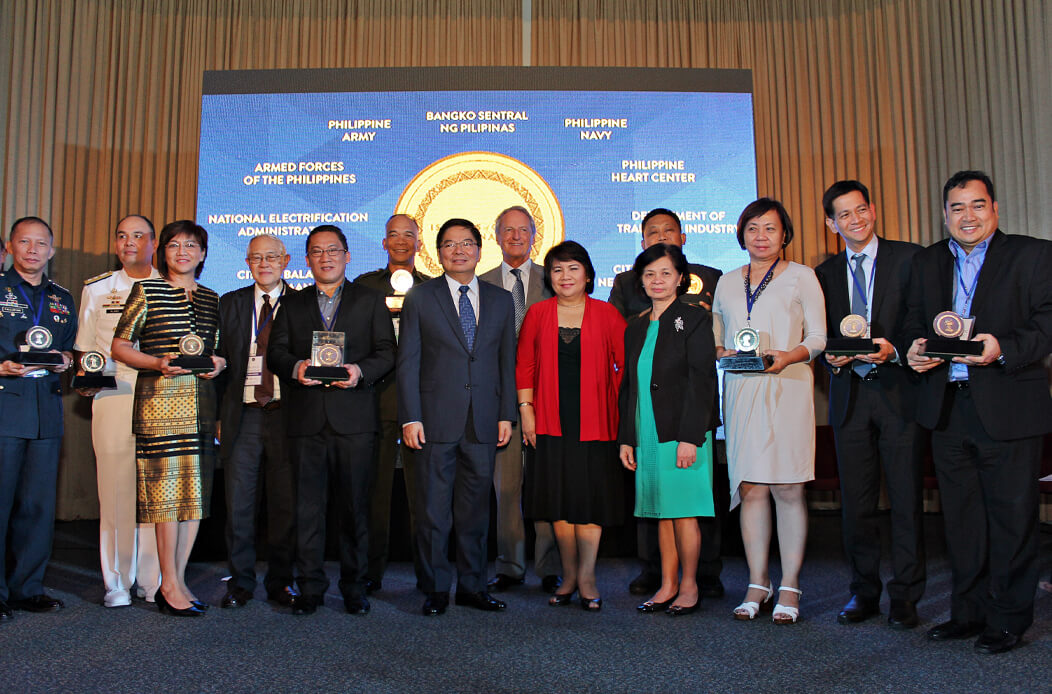
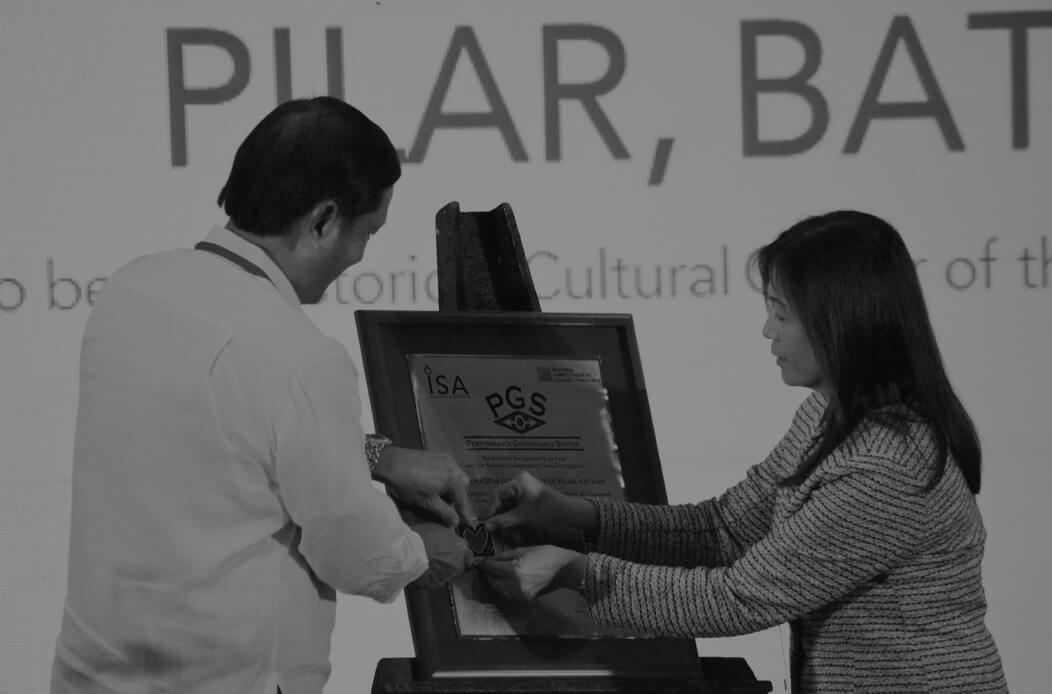
Islands of Good Governance (IGG) is the official recognition program for milestone achievements in the use of PGS. It honors public sector institutions as exemplars of reform and beacons of hope, lighting the way for many others to follow. In line with the long-term goal of setting higher standards for public governance in the country, the Islands of Good Governance (IGG) recognizes public sector institutions based on the following criteria:
Sustainability
Referring to the institution-wide use of effective governance mechanisms to consistently achieve breakthroughs
Impact
Showing how institution-wide reforms have led to the improvement of lives through better public service delivery or new economic growth initiatives
These are independently verified by global experts through audit and public revalida.
The Performance Governance System (PGS) is a holistic and collaborative framework for designing and executing roadmaps to long-term reform.
PGS culls global best practices in managing strategy to meet the rising needs of Philippine public sector institutions. It builds governance reform capacities across a four-stage pathway, and addresses a wide array of challenges while also yielding niche impact. At the national level this means world-class public service; at the local level, a robust economy.
This framework is now used by over 100 national government agencies and local government units in the Philippines, of which 14 have been independently verified by global experts as Islands of Good Governance (IGG), and 5 have been awarded membership in the exclusive Palladium Balanced Scorecard Hall of Fame for Executing Strategy.
These national agencies and local governments continue to raise the bar on what the modern public sector institution can achieve together with its stakeholders. Each one is a true partner in governance reform, playing a significant role in building our Dream Philippines.
We look forward to helping you make great strides for your institution and the country. Take the first step to achieving our Dream Philippines by becoming a PGS partner.

For non-partners, you may send an email to the Program Management Unit at pmu@isacenter.org to learn more. Meanwhile, existing partners are encouraged to reach out directly to their respective program coordinators.

Frequently Asked Questions

Explore this section and find answers to the most frequently asked questions when it comes to the PGS.

GENERAL QUESTIONS

A breakthrough refers to a significant and measurable improvement in performance that creates transformative impact, not only within the organization but also for the communities it serves. It involves addressing long-standing challenges, setting higher standards, and delivering public value in ways previously unattainable.

A breakthrough-oriented strategy is future-focused, anchored on a clear long-term goal, and supported by concrete roadmaps, performance scorecards, and reform initiatives that align people, resources, and processes toward achieving that goal.

No. Operational effectiveness is about doing things better: faster, cheaper, more efficiently. Breakthrough, on the other hand, is about doing the right things to create lasting impact. It’s strategic, not just tactical. While both are important, breakthrough is what moves the organization forward in a bold, meaningful direction.

The PGS is focused on strategic direction and long-term transformation, while ISO is about maintaining consistent quality in operational processes. The PGS asks, “Where are we going, and how will we create real change?” Meanwhile, ISO asks, “How do we ensure reliable performance every day?” Ideally, the PGS should come first because it provides the strategic context. ISO and other certifications can then be aligned to support that strategy.

The PGS doesn’t replace other systems, it strengthens them. It acts as the “backbone” that ties different tools and systems together under a single strategy. Whether it’s ISO, SPMS, RBME, Quality Management Systems, or even local innovations, the PGS helps align these efforts so they work toward a shared goal and not in silos.

GOVERNANCE PATHWAY

Each stage shows how well the strategy is progressing, through actual results and measurable outcomes:

  • Initiation: You have a clear, well-designed strategy—complete with roadmaps and a scorecard.
  • Compliance: You begin deploying the strategy to more units across the organization.
  • Proficiency: You’ve progressed in your journey by building a mature system for managing and tracking your strategy.
  • Institutionalization: You’ve achieved breakthrough results—a long-term strategic goal that creates lasting impact.

The duration of the journey varies depending on the institution’s strategy. Some are able to complete it in as little as three years, while others take up to nine years, spanning three election cycles. Most organizations structure their progress through defined milestones or “basecamps.” Regardless of the timeline, what matters most is achieving steady and strategic progress, from planning to impact.

The process begins with a self-assessment using the maturity criteria for each PGS element. Once completed, the institution submits an application for audit. Upon passing the audit, the Head of Agency presents the organization’s accomplishments in a public revalida. Advancement is based on clear evidence that the strategy is effective and generating meaningful impact.

A public revalida is a formal presentation in which an agency reports and defends its progress before a panel of experts. Upon passing the assessment for the stage being pursued, partners are granted clearance to proceed to the public revalida.

Online revalidas are conducted throughout the year, while onsite revalidas are held twice annually during the Public Governance Forum.

ENROLLING IN THE PGS

Enrollment in the program is voluntary and typically begins when a reform-oriented leader or institution commits to pursuing long-term transformation and subjecting their efforts to public accountability.

To initiate the process, interested parties may contact ISA at programs@isacenter.org. A Program Officer will guide them through the next steps.

The journey may be undertaken in phases. Some organizations begin by setting a basecamp goal or aiming to reach only the first stage, while others commit to completing the full pathway from the outset. What matters most is the organization’s commitment to improvement and seriousness in executing its strategy.

The required investment depends on the size of your organization and the level of support needed. Costs may vary, particularly if you request facilitation services, technical assistance, or co-design of strategy materials. To obtain an accurate estimate, it is best to consult with a Program Officer who can help tailor a plan to your specific requirements.

SUSTAINABILITY MECHANISMS

The Office for Strategy Management (OSM) is a dedicated unit that ensures the organization remains focused on its strategic direction. It is responsible for tracking the scorecard, monitoring the progress of strategic roadmaps, and ensuring alignment across various units. Without an OSM, strategic plans often risk being sidelined or overshadowed by day-to-day operations. For this reason, every PGS practitioner is required to establish one—the OSM serves as the engine room that keeps the strategy active and continuously moving forward.

It depends on the existing capacity of the institution. If the Planning or QMS Office is already equipped to track strategy execution, align organizational units, and manage the scorecard, it may serve as the OSM. However, the strategy management function often demands a distinct mindset, one that is more future-oriented and integrative than traditional planning or compliance. In many organizations, the OSM is a small but empowered team that collaborates closely with both planning and operations units.

A Multi-Sector Governance Council (MSGC) is a group of external stakeholders who support the organization in staying on course with its strategy. They provide independent advice, help mobilize resources, and serve as a mechanism for public accountability. Often described as the strategy’s “critical friends,” MSGC members offer diverse perspectives that may not be available internally, ensuring that the strategy benefits not only the agency but also the broader community it serves.

Not automatically. A governing board typically oversees operations, policy, and compliance, whereas an MSGC is focused on long-term strategy and public accountability. However, if the board includes diverse voices from outside the organization, such as citizens, sector leaders, and partners, it may be adapted to fulfill the MSGC function. The essential requirement is an independent, future-oriented, and multi-sectoral perspective.

Shopping cart